

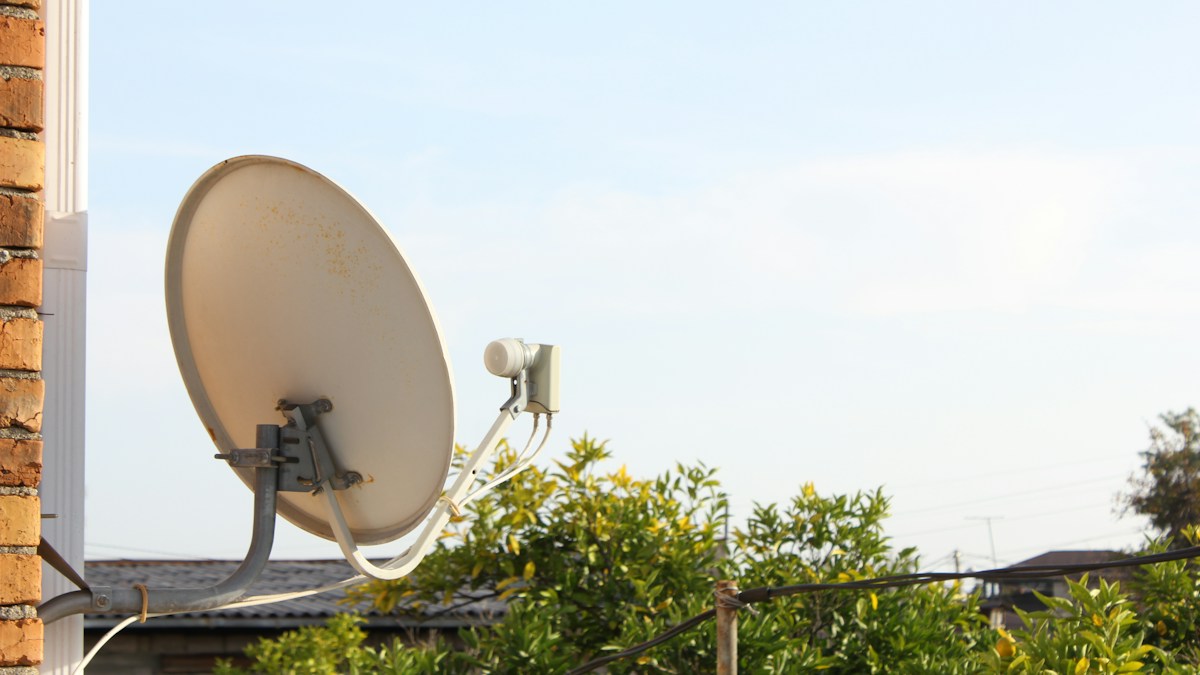
National Electrical Code compliance: bonding elevated satellite masts and coaxial/Ethernet runs to building grounding electrode systems.
The Electrostatic Reality of Rooftop Antennas
Elevated metallic structures on residential roofs act as electrostatic collectors for atmospheric electrical charges during thunderstorm activity. While a direct lightning strike delivers millions of volts that destroy any electronic appliance, proper grounding safely dissipates induced static charges, lowers the attraction potential, and diverts secondary surge currents safely into the earth.
National Electrical Code (NEC) Section 810 Mandates
Under NEC Article 810 (Radio and Television Equipment), an outdoor antenna mast and its lead-in communications cable must be bonded directly to the building main Grounding Electrode System (GES). The antenna mast must be bonded using a minimum 10 AWG copper or 8 AWG aluminum grounding conductor clamped to the metal pole with an approved UL-listed pipe grounding clamp.
Installing In-Line Shielded Gas Discharge Surge Arresters
Where the outdoor Ethernet communications cable enters the building, install an industrial shielded Ethernet surge protector (such as Ubiquiti ETH-SP-G2 or Tupavco TP303). The surge protector features internal gas discharge tubes (GDT) that fire in nanoseconds when voltages exceed 90V, shunting overvoltage transients down a 12 AWG copper lead directly to the main building ground rod.
Technical Specifications & Engineering Matrix
| Component | NEC Specification | Conductor Material | Connection Point | Purpose |
|---|---|---|---|---|
| Mast Grounding Conductor | NEC 810-21 (Min 10 AWG) | Solid Bare Copper Wire | Metal Mast to Ground Rod | Static Charge Dissipation |
| In-Line Ethernet Surge Protector | UL 497B Certified | Shielded RJ45 Gas Discharge | At Exterior Wall Entry Point | Protects Indoor Router & Switch |
| Ground Rod Clamp | UL 467 Listed Direct Burial | Bronze Ground Clamp | Main Building 5/8″ Copper Rod | Low-Impedance Earth Dissipation |
| Intersystem Bonding Termination | NEC 250.94 Grounding Block | Copper Busbar Block | Outside Electric Meter Base | Code-Compliant Single-Point Ground |
💡 Expert Field Recommendation
Never drive a secondary independent ground rod for your satellite dish without bonding it back to your primary electrical service panel ground rod with heavy 6 AWG copper wire. Separate un-bonded ground rods create dangerous ground potential differences during lightning strikes, causing electrical fires.
Diagnostic Troubleshooting Checklist
- Surge Protector Drops Gigabit Speed to 100 Mbps: Ensure your Ethernet surge protector is certified for Category 6 Gigabit (1000Base-T) operation across all 8 pins and features shielded metal RJ45 jacks.
- Ground Clamp Corroding on Copper Mast: Avoid mixing dissimilar metals; do not clamp bare copper wire against zinc-galvanized masts without an approved bi-metallic bronze or stainless steel spacer.
- Router Dies During Thunderstorm Despite Surge Protector: Surges can enter through the 120V AC household power lines; protect the router AC wall outlet with a Type 3 surge-protected power strip.
Frequently Asked Questions
Will grounding an antenna guarantee protection against a direct lightning strike?
No grounding system can guarantee survival against a direct 100,000-ampere lightning hit; grounding is designed primarily to bleed off static charge to prevent strikes and safely absorb nearby induced surges.
Does Starlink require shielded Ethernet cable?
Yes, the factory Starlink cable is fully shielded with foil and drain wire to reduce RF interference and safely conduct transient charges to grounded equipment.
Article researched, lab-tested, and verified by Travis Caldwell, dedicated technical specialist and editorial contributor.
