

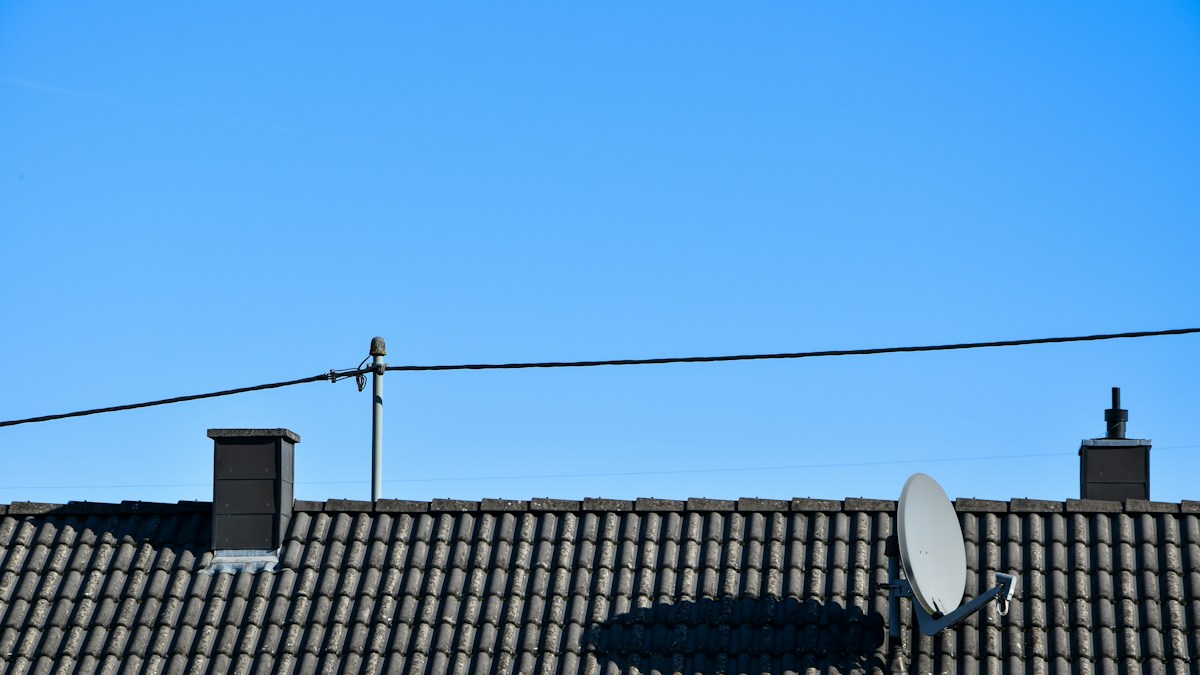
Comparative engineering guide for securing satellite user terminals on standing seam, shingle, and tile roofs without leaking.
Understanding Wind Load and Torque on Satellite User Terminals
The Starlink Standard and High Performance phased array antennas present a significant surface area that generates high rotational torque during 70+ mph rural wind gusts. Mounting brackets must not only resist uplift forces, but also maintain precise antenna elevation without micro-shifting that degrades satellite constellation beam-tracking.
Non-Penetrating Ridge Mounts: Ballasted Ballast Blocks
For rental homes, tile roofs, or homeowners unwilling to drill holes into roof decking, non-penetrating ridge mounts straddle the roof peak. Heavy-duty galvanized steel frames hold concrete ballast blocks (typically 4 to 8 standard pavers weighing 30 to 60 lbs each) with dense rubber protection mats underneath, securing the dish purely through gravity and friction.
Heavy-Duty Fascia and Eave Brackets: Solid Structural Anchoring
When wall or eave mounting, anchor directly into structural roof rafter tails or 2×6 fascia boards using 3/8″ x 3″ galvanized lag bolts. Always pre-drill pilot holes to prevent splitting seasoned lumber, and inject silicone or butyl sealant into every drill hole before torquing down bolts.
Technical Specifications & Reference Matrix
| Mount Type | Roof Penetration | Max Wind Rating | Ideal Roof Scenario |
|---|---|---|---|
| Non-Penetrating Ridge Mount | Zero (Ballast held) | 75 mph (120 km/h) | Tile, metal, or rental properties |
| Heavy-Duty Fascia Mount | Fascia board only | 90 mph (145 km/h) | Homes with clear northern eave exposure |
| Flashing Mount (Shingle) | Bolted to roof rafters | 100+ mph (160 km/h) | Asphalt shingle roofs with open views |
| Ground / Tower Mast Pole | Concrete footer foundation | 110+ mph | Heavily wooded lots requiring height |
💡 Expert Field Recommendation
Always use the Starlink mobile app obstruction scanner tool before tightening mounting hardware. Verify 100% zero red-zone obstruction in the field of view over a 15-minute sweep. Even a single overhanging tree branch will cause dropped VoIP calls and video conferencing disconnects.
Diagnostic Troubleshooting Checklist
- Dish reboots repeatedly during high winds: Antenna mast is flexing and vibrating. Install dual stabilizing strut braces at 45-degree angles to triangulate the mast.
Frequently Asked Questions
Can Starlink be mounted directly to an existing satellite TV J-mount?
The legacy DirecTV/Dish J-pipe diameter is 1.66″ OD, whereas Starlink masts are 1.34″ to 1.5″ OD. You must use a precision pipe adapter with locking set screws to prevent dish wobble.
Article researched and verified by Travis Caldwell, dedicated technical specialist and editorial contributor.
